Tokyo Nightlife vs. Vegas: Why the Desert's Nightclub Formula Is Getting Lapped by the Land of the Rising Sun
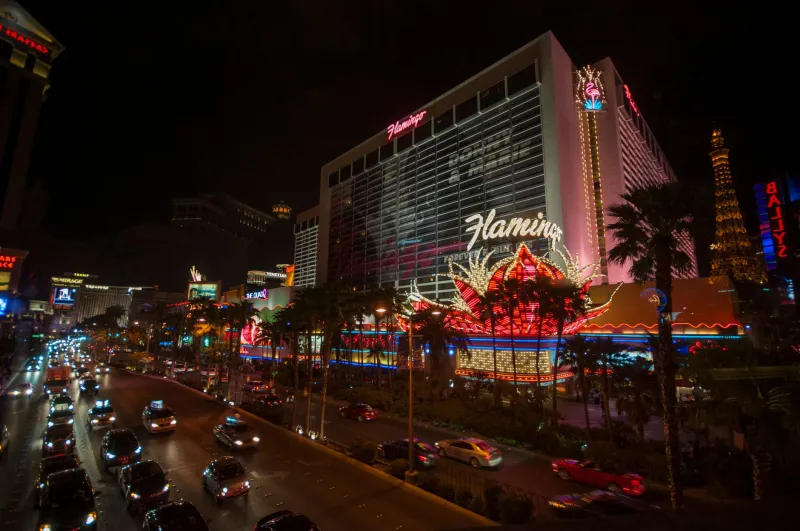
Let's be honest about Las Vegas for a second.
For a long time — a genuinely long time — it was the uncontested world capital of going out. You wanted spectacle? Vegas had it. You wanted excess? Vegas invented it. You wanted a nightclub experience that felt like it cost a million dollars? Vegas charged you accordingly and delivered, mostly.
But something has shifted. And if you've spent a night inside a venue like Atlantis Ikebukuro in Tokyo and then tried to go back to a Vegas megaclub, you've felt the shift in your bones. Vegas isn't bad. It's just started to feel like a greatest hits album from a band that stopped writing new material.
Tokyo, meanwhile, is in the studio every night.
The Formula Problem
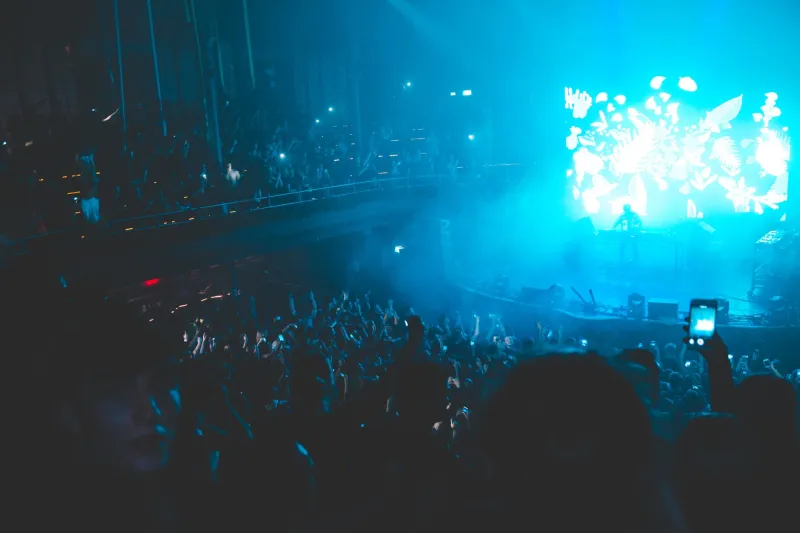
Here's the Vegas nightclub formula, boiled down to its essentials: big room, bigger sound system, celebrity DJ, VIP tables with bottle service, and a crowd that's mostly there to say they were there. It's been the template since the early 2000s, and while it's been refined and polished over two decades, the underlying logic hasn't changed much.
That formula worked — spectacularly — when it was new. When Wynn and MGM were competing to out-spectacular each other, when a $50,000 table felt transgressive and exciting, when the DJ-as-celebrity-god model was still genuinely thrilling. But formulas age. And this one has.
The problem isn't that Vegas clubs are bad at what they do. The problem is that what they do has become almost entirely predictable. Walk into virtually any major Vegas nightclub in 2024 and you can sketch the layout, the vibe, the drink menu structure, and the crowd demographic before you've ordered your first drink. There's comfort in that, sure. But there's no discovery.
Tokyo's best themed nightlife venues operate on a completely different principle: every detail should surprise you.
What World-Building Actually Looks Like in Practice
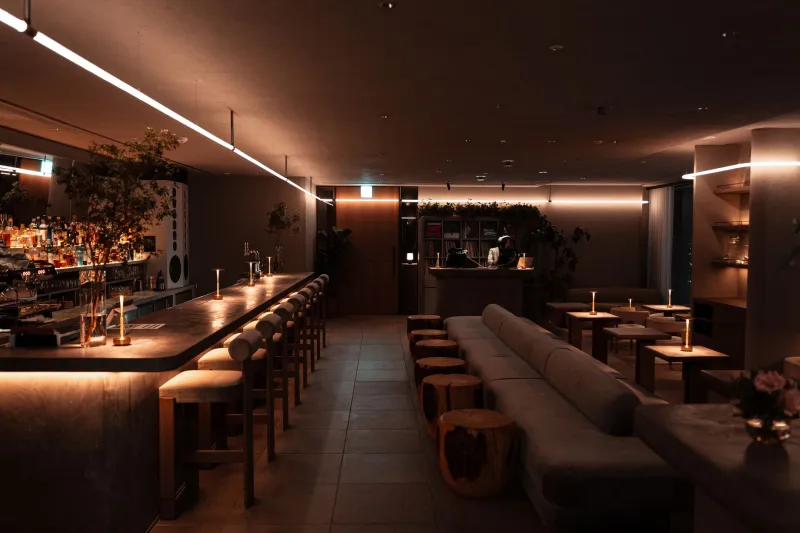
Atlantis Ikebukuro is a useful case study because it illustrates exactly where the Tokyo model diverges from Vegas. The venue isn't just decorated with an Atlantis theme the way a casino might slap a logo on a bar and call it branded. The mythology is structural — it informs the lighting design, the cocktail program, the staff aesthetic, the music curation, the spatial layout. Every element is in conversation with every other element.
This is what designers and experience architects call coherent world-building, and it's shockingly rare in nightlife anywhere in the world. Vegas clubs are designed to impress you with scale. Tokyo venues like this one are designed to convince you of a reality. Those are fundamentally different goals, and they produce fundamentally different experiences.
When you're inside Atlantis Ikebukuro, you're not standing in a decorated room. You're standing in a version of a place — a place that doesn't exist, a sunken city of legend — rendered with enough specificity and conviction that your brain starts to accept the premise. That's a creative and technical achievement Vegas hasn't really attempted.
The Creativity Gap Is Real
There's a reason Tokyo keeps producing genuinely new concepts in entertainment while Vegas keeps refining existing ones. It comes down to creative culture and competitive pressure.
Japan's entertainment industry has always rewarded novelty and conceptual commitment. The themed cafe tradition alone — maid cafes, cat cafes, concept restaurants built around specific aesthetics or narratives — represents decades of iterative creativity in experiential design. That culture has seeped into every corner of Tokyo's nightlife. Venue owners aren't just asking "how do we make a great club?" They're asking "what world do we want to build, and how do we make people believe in it?"
Vegas, by contrast, operates in an environment where the financial stakes are so enormous and the proven formula is so lucrative that genuine risk-taking is rare. Why reinvent the wheel when the wheel is printing money? The result is an industry that's excellent at optimization and poor at imagination.
That's not a knock on Vegas operators as people. It's a structural critique. The incentives don't reward the kind of creative swings that produced something like Atlantis Ikebukuro.
What Vegas Could Actually Learn
To be fair, Vegas isn't incapable of evolution. The city has shown genuine creativity in areas like immersive art installations, theatrical residencies, and some of its more adventurous food and beverage concepts. The bones of the city — the willingness to spend big, the infrastructure for large-scale entertainment, the tourist volume — are assets that Tokyo can't match.
But if Vegas wanted to genuinely compete with what Tokyo is doing in themed nightlife, it would need to make some uncomfortable concessions.
First, it would need to accept that coherent theming requires restraint. You can't build a convincing world if you're also trying to cram in every amenity and upsell opportunity available. The Vegas instinct is always to add more. World-building sometimes requires saying no.
Second, it would need to invest in creative direction the way it currently invests in celebrity bookings. The talent that built the interior logic of a venue like Atlantis Ikebukuro isn't a DJ or a performer — it's a team of designers, writers, and concept artists. Vegas doesn't really have a pipeline for that kind of talent because it hasn't needed one. Building that pipeline takes time and cultural shift.
Third — and this is the hardest one — it would need to stop treating the nightclub as a vehicle for table service revenue and start treating it as an experience worth paying for on its own terms. Tokyo venues charge for the experience. Vegas clubs charge for the access. That's a subtle distinction with enormous downstream effects on what gets built and why.
Why This Matters for Nightlife Tourism
American travelers are getting more sophisticated about what they want from a night out abroad. The days of flying to another country and seeking out the same kind of club you could find in Miami are fading. People want experiences that are native to where they are — that couldn't exist anywhere else.
Tokyo's themed nightlife scene, with Atlantis Ikebukuro as one of its most compelling examples, is native in the deepest sense. It draws on Japanese creative culture, Japanese attention to detail, and a specifically Japanese willingness to commit fully to a concept without hedging. You can't replicate that in a city that thinks differently.
For American travelers, that's actually the whole point. You go to Tokyo to experience something Tokyo-shaped. And right now, Tokyo-shaped nightlife is the most interesting nightlife on the planet.
Vegas had a long, glorious run as the benchmark. But the benchmark moved. And it moved to Ikebukuro.