Where Poseidon Meets the Neon: Inside the Design Vision That Makes Atlantis Ikebukuro Unlike Any Club You've Ever Stepped Into
Walk through the entrance of Atlantis Ikebukuro and something shifts. The street noise of Ikebukuro — that constant, electric hum of one of Tokyo's busiest entertainment districts — fades behind you. What replaces it is something harder to describe: the low pulse of ambient sound that feels genuinely ancient, layered under bass frequencies that are very much alive right now. You're not in a club yet. You're in a threshold.
That sensation didn't happen by accident.
The Brief Nobody Expected
When the creative team behind Atlantis Ikebukuro first sat down to develop the venue's concept, the challenge on the table wasn't just "make it look cool." It was something far more demanding: build a space where a mythology that originated thousands of years ago in the Mediterranean feels completely at home inside a 21st-century Japanese megacity.
"We didn't want to do a costume party version of Atlantis," explains one of the venue's lead creative directors. "Columns and fish tanks — that's the easy answer. We wanted people to feel like they'd actually discovered something."
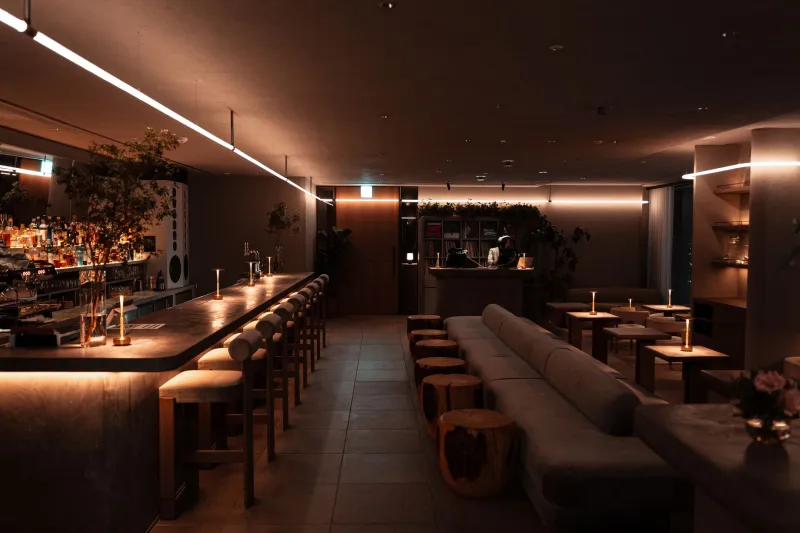
That instinct drove every decision from the floor plan outward. Rather than plastering Greek iconography across a standard club layout, the design team restructured the space itself to suggest submersion. Ceilings taper and curve in ways that evoke pressure — the sensation of depth. Lighting rigs were custom-built to simulate the way sunlight fragments and scatters through seawater, shifting from gold near the entrance to a deep, bruised indigo toward the main floor.
Mythology as Architecture
The venue's aesthetic language draws from two very different wells. On one side, there's the classical visual vocabulary of ancient Greek civilization — the geometric precision of Minoan patterns, the columnar proportions of Hellenistic architecture, the recurring motifs of tridents, waves, and sea creatures that appear throughout the space in unexpected places. Look closely at the bar countertop and you'll notice the surface is inlaid with a mosaic that references the floor patterns found at Knossos. It's subtle enough that most guests won't consciously register it, but it contributes to a feeling of layered authenticity.
On the other side sits contemporary Japanese design sensibility, and this is where Atlantis Ikebukuro gets genuinely interesting. Tokyo's entertainment culture has always had a gift for maximalism — for environments that are dense with visual information without ever feeling chaotic. That quality turned out to be a perfect partner for mythology-driven design.
"Japanese pop culture has always loved mythology," notes a member of the venue's visual design team. "Whether it's manga, gaming, or fashion — there's a real fluency with legendary worlds. So when we brought in Greek mythological elements, the local design perspective didn't resist it. It absorbed it and pushed it further."
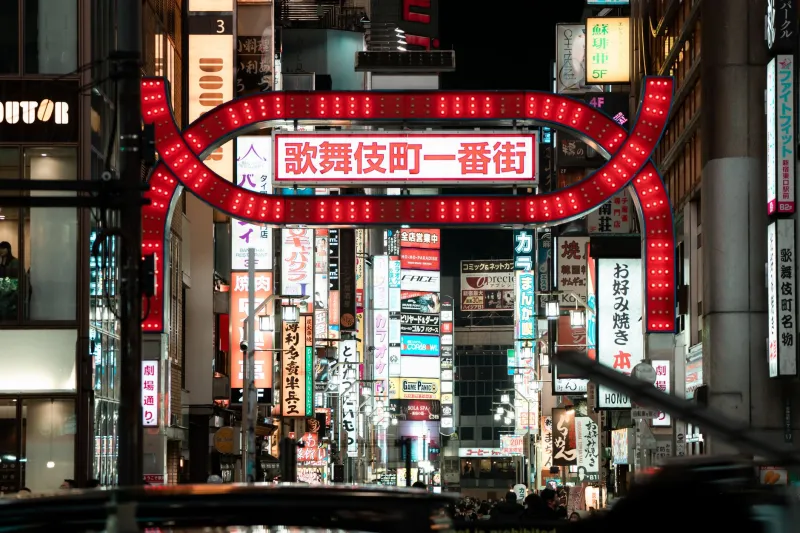
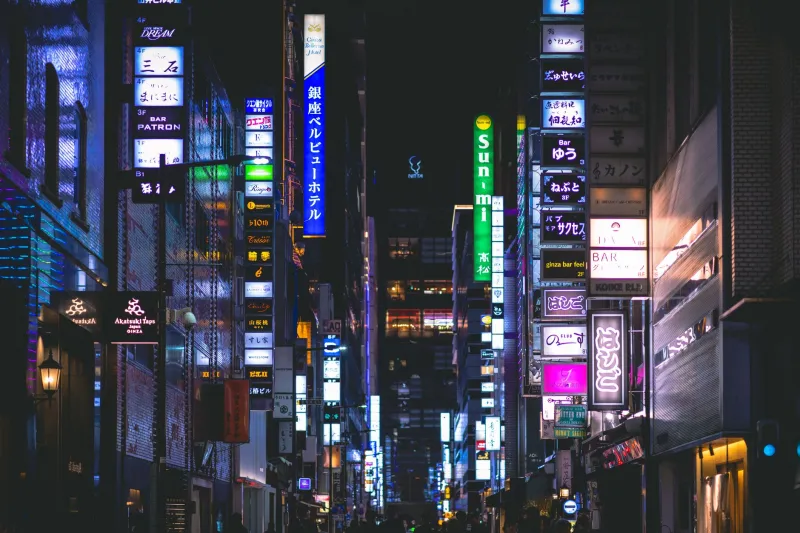
The result is a visual dialect that doesn't exist anywhere else. Neon kanji lettering — rendered in oceanic teal — sits beside carved stone-effect panels. A DJ booth built to resemble the prow of an ancient trireme faces a crowd illuminated by fixtures that look like bioluminescent deep-sea organisms. It shouldn't work. It absolutely does.
The Immersive Entertainment Shift
Atlantis Ikebukuro's design philosophy didn't emerge in a vacuum. Across the global entertainment landscape, venues built around narrative and environment are pulling audiences away from spaces that offer nothing beyond a playlist and a bar. Escape rooms evolved into immersive theater. Theme parks started competing with art installations. And nightclubs started asking whether "the vibe" could be something more structured — more intentional — than a lighting rig and a good sound system.
For international visitors, especially Americans accustomed to the polished but often predictable entertainment formulas of Vegas or Miami, venues like Atlantis Ikebukuro represent something genuinely new. The mythology framing gives the experience a narrative backbone. You're not just going out — you're going somewhere.
"Our guests from the US often tell us they've never been anywhere that feels this complete," says one of the venue's hospitality leads. "Like every detail was thought through. That's what we were going for — an experience with no gaps."
Details That Do the Heavy Lifting
Some of the most effective design choices at Atlantis Ikebukuro are the ones that operate almost below the threshold of conscious awareness. The scent profile of the space — a custom blend developed specifically for the venue — incorporates notes of sea salt, mineral stone, and something faintly floral that you can't quite place. Sound designers layered recordings of deep-ocean ambience into the venue's audio environment, audible only in quieter zones near the lounge areas.
Staff uniforms were developed in collaboration with a Tokyo-based costume designer whose background spans theater and fashion. The result is something that reads as contemporary and wearable while still carrying visual cues — embroidered wave motifs, deep-sea color palettes — that reinforce the world the venue is building.
Even the cocktail menu was developed as a design document. Each drink is named and presented as an artifact from the lost city, with table cards that frame the menu as recovered texts from Atlantis's final days. It sounds like a gimmick on paper. In person, surrounded by everything else the space is doing, it lands.
What It All Adds Up To
The most honest way to describe what Atlantis Ikebukuro has built is this: it's a venue that respects its audience enough to go all the way. Half-measures in themed entertainment tend to collapse under scrutiny — one inconsistent detail can break the spell entirely. What makes this space work is the refusal to let that happen.
Greek mythology and Tokyo nightlife aren't obvious partners. But in the hands of a creative team willing to dig into both with genuine curiosity, they've produced something that feels less like a mashup and more like a discovery — which, when you think about it, is exactly the right feeling for a place named after the most famous lost world in history.