Lost in the Story: The Real Reason American Travelers Can't Stop Chasing Mythic Nightlife in Tokyo
There's a moment that a lot of first-time visitors to Atlantis Ikebukuro describe in almost identical terms. You step through the entrance, the lighting shifts from the ordinary glow of the Ikebukuro street outside to something cooler, deeper, and more electric — and for a second, you forget what country you're in. Actually, you forget what century you're in.
That moment isn't an accident. And increasingly, American travelers are actively hunting for it.
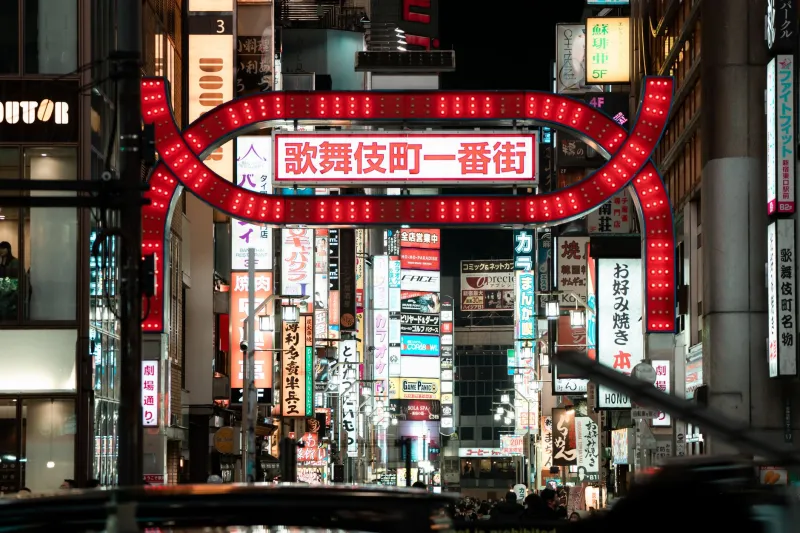
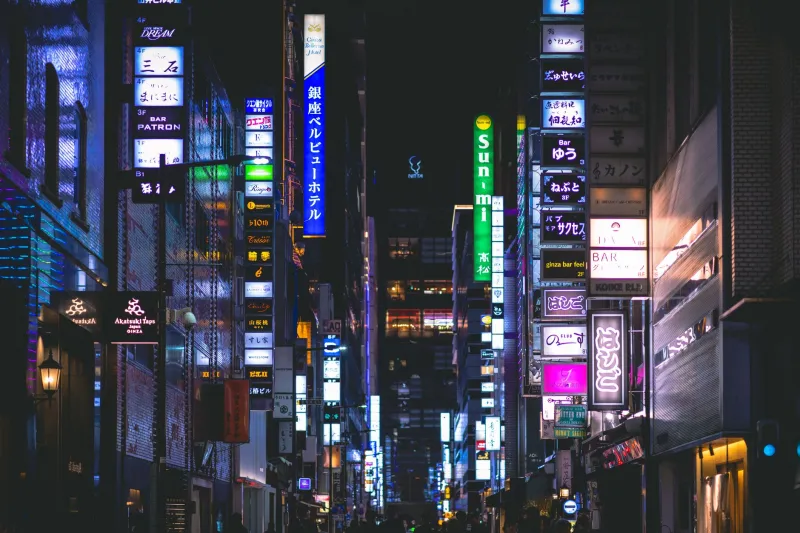
Over the last few years, a quiet but unmistakable trend has been reshaping how US visitors approach nightlife abroad. The old checklist — find a rooftop bar, order something local, take a photo — is getting replaced by something more ambitious. People want to step into a world, not just pass through it. And Tokyo, with its unmatched appetite for conceptual entertainment, has become the global capital of exactly that.
Why Stories Hit Different After Dark
Psychologists who study experiential entertainment have a phrase for what happens inside immersive venues: narrative transportation. Basically, when an environment is rich enough in detail and consistent enough in its internal logic, your brain starts treating it as real. The themed lighting, the costumed staff, the cocktail menu that reads like an ancient manuscript — each element stacks on the others, and before long, you're not a tourist from Columbus or Charlotte anymore. You're a visitor to a sunken civilization.
This isn't just feel-good theory. Research on peak experiences consistently shows that the more a person feels inside a story rather than watching one, the more emotionally significant the memory becomes. Venues like Atlantis Ikebukuro are essentially engineering those peak moments, and Americans — raised on theme parks, cinematic universes, and interactive entertainment — are primed to respond to them.
"I've been to clubs in Miami, in New York, in Vegas," said Marcus, a 34-year-old from Atlanta who visited Atlantis Ikebukuro during a two-week trip to Japan. "There's always music, there's always a crowd, there's always a line. But I never walked away from any of those places with an actual story to tell. Tokyo was different. I have a story now."
That's the word that keeps coming up when you talk to American visitors about themed nightlife in Tokyo: story.
The Instagram Effect Is Only Half the Picture
It would be easy to write this whole trend off as aesthetic tourism — people going places because they look good on a grid. And sure, a venue built around the mythology of a lost underwater civilization photographs beautifully. The bioluminescent bar lighting, the architectural details that suggest coral and ancient stone, the staff whose styling feels like it belongs to another world entirely — all of it is inherently shareable.
But dismissing the phenomenon as purely visual misses what's actually driving it. Talk to enough American travelers who've made the pilgrimage to venues like Atlantis Ikebukuro, and you start to hear something more interesting than "it looked cool online."
Jessica, a 28-year-old from Portland, put it plainly: "I'm honestly a little over the Instagram-bait thing. I didn't go because it looked pretty. I went because someone told me it felt like being inside a myth. That's not something you can fake with good lighting."
What she's describing is world-building — the same craft that makes a great novel or a well-designed video game feel like a place you actually inhabit rather than a thing you consume. Tokyo's best themed venues have figured out how to apply that craft to a physical space, and the effect is something genuinely different from what most Americans have access to back home.
What Tokyo Gets That Other Cities Don't
There's a cultural dimension here that's worth taking seriously. Japan has a long, sophisticated tradition of concept entertainment — spaces designed around a singular, cohesive idea executed with near-obsessive attention to detail. From themed cafes to elaborate capsule hotels to theatrical dining experiences, the culture has always rewarded creativity and commitment to a bit. Atlantis Ikebukuro sits squarely in that tradition.
The Atlantis mythology is an inspired choice for a Tokyo venue. It's universal enough that American visitors arrive with a framework — the lost city, the sea, the mystery — but open-ended enough that the designers had real room to build something original. The result is a venue that feels simultaneously familiar and completely unlike anything you've seen before.
For American travelers specifically, that balance is powerful. You're not struggling to decode something entirely foreign. You're recognizing a story you already know, rendered in a way you've never experienced.
The Memory You Actually Keep
Here's the practical argument for seeking out this kind of nightlife when you're traveling: immersive, narrative-driven experiences are simply more memorable than conventional ones.
Think about the last time you went to a standard club or bar. You probably remember the vibe, maybe a song, maybe who you were with. Now think about the last time you were genuinely inside an experience — a great theme park ride, a really committed haunted house, a dinner theater that actually pulled you in. The details are sharper, right? The emotional residue lasts longer.
Travel is expensive. A trip to Tokyo is a real investment of time and money for most Americans. The experiences that justify that investment aren't the ones you could have replicated in a city closer to home. They're the ones that are only possible there, in that specific place, built by people who care deeply about a specific vision.
Atlantis Ikebukuro is that kind of place. It's not a bar with a cool name. It's a whole world — one that happens to serve excellent cocktails and play great music. And increasingly, that distinction is exactly what American travelers are crossing an ocean to find.
How to Go In Ready
If you're planning a trip to Tokyo and this kind of immersive nightlife is on your radar, a few things are worth knowing. First, don't rush it. The point isn't to knock back drinks and move on — it's to actually inhabit the space for a while. Give yourself time to notice the details, to talk to the staff, to let the environment do its work on you.
Second, go with people who are genuinely curious. The mythology effect works best when the people around you are invested in it too. Bring a skeptic and you'll spend the night explaining why it's cool instead of just experiencing it.
And third — this one matters — check the event calendar before you go. Atlantis Ikebukuro runs themed nights and special events that layer additional storytelling onto the base experience. Hitting one of those nights is a completely different level of immersion.
The lost city is waiting. And if you're the kind of American traveler who's looking for something that actually means something when you get home, it might be exactly what you've been looking for.