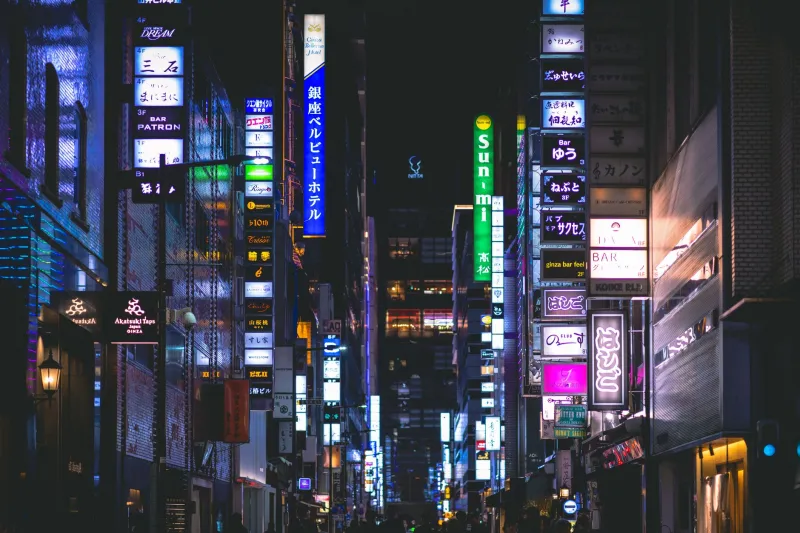
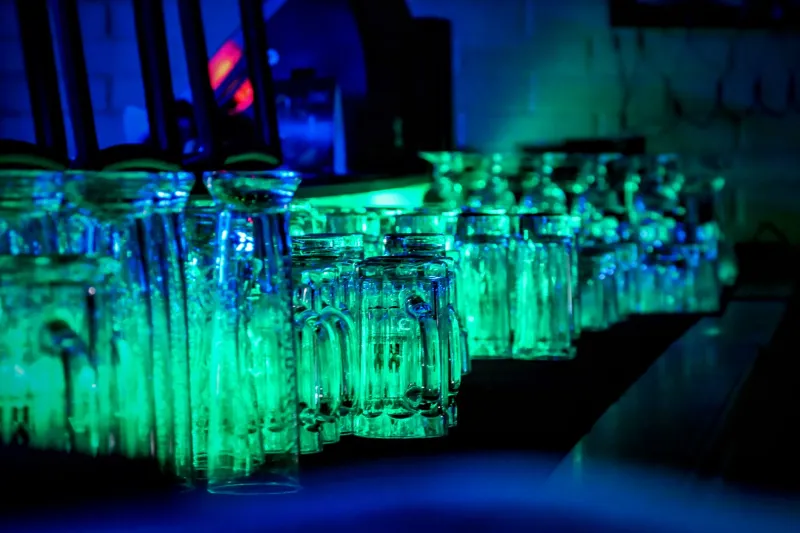
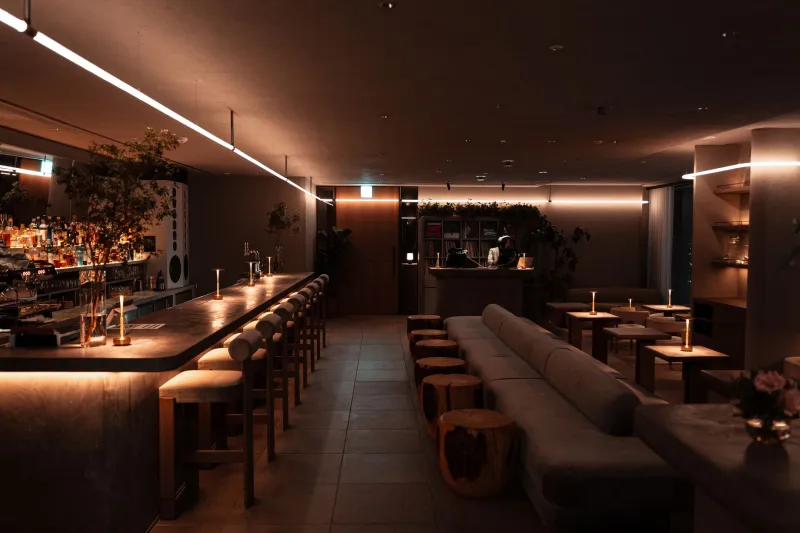
Tokyo After Dark Is Winning: Why American Travelers Are Ditching the Strip for Something Way More Interesting
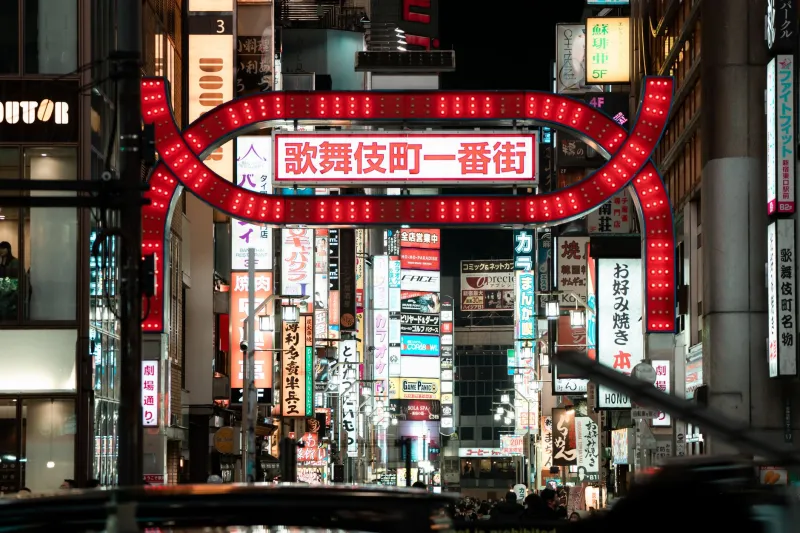
Let's be honest about Las Vegas for a second. It's impressive. It's enormous. It has mastered the art of making you feel like something extraordinary is happening even when you're standing in line for a buffet. But if you've done Vegas — really done it — you know the feeling that sets in around the second or third trip. The spectacle is still there. The surprise isn't.
That gap between spectacle and genuine surprise is exactly where Tokyo's nightlife scene has quietly built something remarkable. And American travelers, increasingly, are noticing.
The Numbers Tell a Story
US tourism to Japan has been climbing steadily, and the profile of who's making the trip has shifted. It's not just anime fans and foodies anymore — though both are still very much represented. The traveler heading to Tokyo in 2024 increasingly includes people who would have defaulted to a European city break or a domestic destination in previous years. They're coming specifically for experiences that feel genuinely different from what's available at home.
Nightlife is a bigger part of that equation than the travel industry typically acknowledges. Venues like Atlantis Ikebukuro — built around mythology, narrative, and an almost architectural commitment to atmosphere — are showing up on itineraries that used to max out at temples and ramen spots. The entertainment district of Ikebukuro, long beloved by locals but underrepresented in Western travel coverage, is getting a second look.
And once people actually show up? They tend to stay longer than planned.
What Vegas Does Well (And Where It Hits a Wall)
This isn't a Vegas takedown. The Strip does what it does at a scale that's genuinely unmatched — the production value of a major residency show, the sheer density of options within walking distance, the way the whole city seems engineered to keep you engaged and spending. If you want controlled, predictable, high-gloss entertainment, Vegas delivers every time.
But that reliability is also its ceiling. The experiences are designed to be immediately legible — you know what you're getting before you arrive, and the goal is execution rather than discovery. There's very little room for the unexpected. The mythology of Vegas is Vegas itself, and after a while, that self-referential quality starts to feel like a hall of mirrors.
Tokyo operates on different logic entirely.
The Immersion Gap
What venues like Atlantis Ikebukuro offer that Western entertainment complexes rarely match is genuine narrative depth. The space isn't just themed — it's committed. Every design decision, from the custom scent profile to the lighting architecture to the cocktail menu, is in service of a coherent world. Walking in feels less like entering a bar and more like being dropped into an environment that has its own internal rules.
For American visitors, this tends to produce a specific reaction: disorientation followed quickly by delight. The disorientation comes from not having a ready template for what this is. The delight comes from realizing that's actually the point.
"I didn't know what I was walking into," said one traveler from Chicago who visited Atlantis Ikebukuro during a two-week Japan trip. "I'd been to immersive experiences back home — escape rooms, themed bars, all of that. This was something else. It felt like the whole building believed in itself."
That quality — a venue that believes in itself completely — is harder to manufacture than it sounds. It requires creative investment that goes well beyond interior decoration, and it requires a hospitality culture that treats the guest experience as something to be curated rather than just managed.
The Instagram Factor (And Why It's Not the Whole Story)
Yes, Atlantis Ikebukuro photographs beautifully. The deep-ocean lighting palette, the architectural drama, the visual tension between ancient Greek motifs and contemporary Japanese design — all of it generates content that performs well. Anyone who tells you that doesn't matter in 2024 is not paying attention to how travel decisions actually get made.
But reducing Tokyo's appeal to its photogenic qualities misses what's actually driving repeat visits and word-of-mouth recommendations. People aren't just going to Atlantis Ikebukuro to take pictures. They're going because the pictures, for once, don't quite capture it — and that gap between the image and the reality is what keeps people talking.
The best immersive venues create experiences that resist full documentation. Something gets lost in translation between the room and the screen, and that loss is actually a feature. It gives people a reason to say "you have to go yourself" rather than just double-tapping a post and moving on.
Tokyo Nightlife Is Playing a Different Game
American entertainment culture, broadly speaking, tends to prioritize access and comfort. The goal is to remove friction — to make sure every guest knows exactly where to go, what to expect, and how to have a good time without having to work for it. That's a legitimate philosophy, and it produces consistently satisfying experiences.
Japanese nightlife culture is more comfortable with mystery. There's a reason so many of Tokyo's best bars are unmarked, that its most interesting venues reward the curious over the casual, that the experience of finding something is considered part of the experience itself. Atlantis Ikebukuro sits at an interesting intersection — accessible enough for international visitors who don't speak Japanese, but still committed to the idea that discovery is part of what you're paying for.
For US travelers who've started to feel like domestic entertainment options have been optimized to the point of blandness, that's a genuinely refreshing shift.
The Case for Going East
None of this means Vegas is going anywhere. Neither is Nashville, or New Orleans, or any of the other American cities that have built serious nightlife identities. The domestic options are real and worth celebrating.
But if you're the kind of traveler who wants to come home from a trip with a story that doesn't sound like anyone else's — if you want to stand somewhere at midnight and genuinely not know what to compare it to — Tokyo is making a compelling case right now. And Atlantis Ikebukuro, sitting at the center of Ikebukuro's entertainment district like a lost city that somehow found its way to the surface, is one of the strongest arguments in that case.
The lost city is open. The question is whether you're ready to find it.