From Cold to Ancient: How Luxury Nightlife Ditched the White Box and Went Full Myth
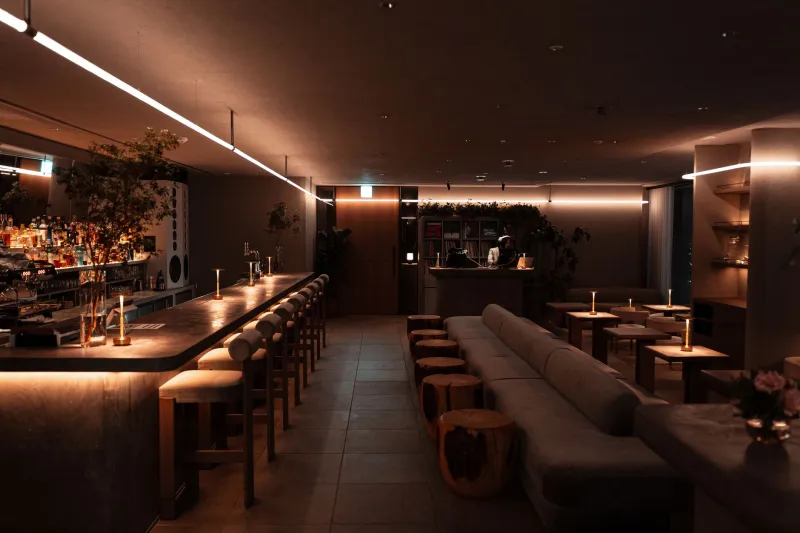
There was a moment — somewhere around 2013 — when every upscale bar in America started to look exactly the same. Exposed concrete. Muted neutrals. A menu printed on kraft paper. A bartender with a waxed mustache who described your cocktail using the word "foraged" at least twice. It was clean. It was photogenic. It was, if we're being honest, a little soul-crushing.
Fast forward to now, and something has shifted hard in the opposite direction. The venues generating the loudest buzz — the ones earning the longest waitlists, the most frenzied social content, and the highest per-visit spending — are not the minimalist temples. They're the ones that look like they were designed by a team of archaeologists, fantasy novelists, and theatrical set directors who were given an unlimited budget and zero instructions to calm down.
Welcome to the age of mythic maximalism. And if you want to understand where it's heading, Atlantis Ikebukuro in Tokyo is the place to start.
The Minimalism Hangover Is Real
To be fair, minimalism had its moment for good reasons. After years of Vegas-style excess — mirrored ceilings, velvet everything, bottle service that cost more than a semester of community college — the stripped-down aesthetic felt like a breath of fresh air. It also photographed beautifully, which mattered enormously as Instagram became the de facto discovery engine for nightlife.
But here's the problem with designing a space entirely around a clean, flat photograph: once you've seen the photo, you've essentially experienced the place. There's no reason to go. There's nothing to explore. The space gives everything away in a single frame.
Consumers — especially younger ones — figured this out. And they started craving something a flat image simply cannot deliver: depth. Mystery. The feeling that there's always another corner to turn, another detail to discover, another layer of meaning embedded in the room around them.
That craving is exactly what mythic maximalism answers.
What Atlantis Ikebukuro Actually Built
Situated in the electric sprawl of Ikebukuro, one of Tokyo's most kinetic neighborhoods, Atlantis Ikebukuro didn't set out to be a bar. It set out to be a world — specifically, the drowned world of Atlantis, pulled from the deep and reconstructed in obsessive, tactile detail.
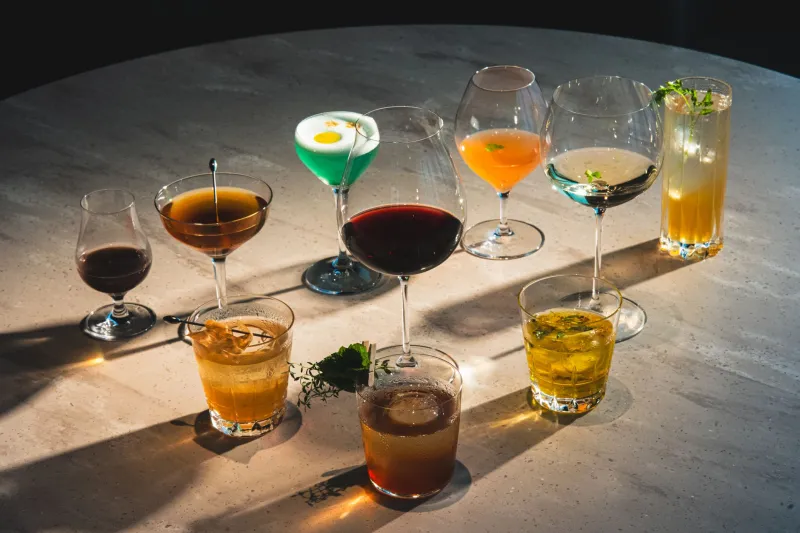
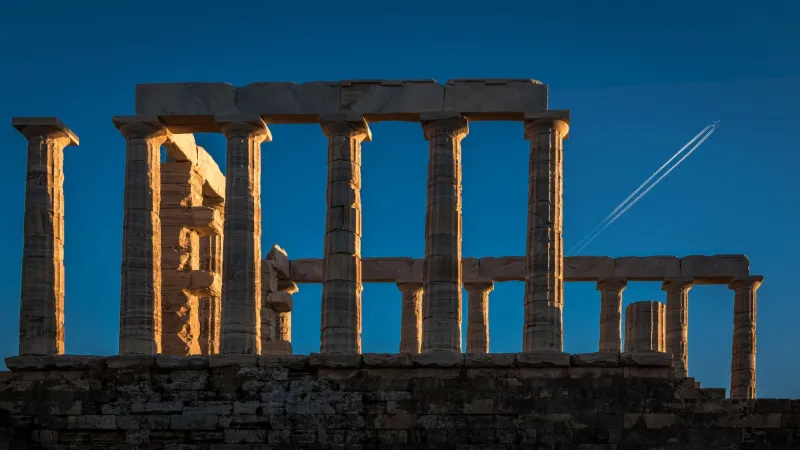
Every design decision tells a piece of the story. The architectural language draws from ancient maritime civilizations, referencing the kind of stonework and columned grandeur you'd associate with a civilization that believed itself to be eternal. The lighting shifts and pulses like filtered ocean light. The sound design layers ambient depth beneath the music, creating a subconscious sense of submersion. Even the cocktail menu functions as a chapter in an ongoing narrative — each drink tied to a figure, a legend, or a moment in the mythology of the lost city.
This is not decoration. It's world-building. And that distinction matters enormously.
Decoration is what you add to a space after the concept is set. World-building is the concept. Every element exists in service of a coherent story, which means the whole is dramatically greater than the sum of its parts. Guests aren't just looking at a well-designed room — they're inhabiting a place that feels like it has history, stakes, and secrets.
The Global Race to Build Mythic Worlds
Atlantis Ikebukuro didn't invent this approach, but it's become one of its most visible and influential practitioners. And the hospitality industry is watching closely.
Across the globe, a growing number of high-concept venues are moving away from the spare, editorial aesthetic and toward something richer and stranger. In London, a cluster of new openings has leaned into Victorian occultism and alchemical imagery. In New York, several ambitious bar projects have drawn from Greek and Roman antiquity, building menus and environments around the pantheon rather than the produce aisle. In Los Angeles, the trend has taken on a more mystical, pre-Columbian energy, with venues exploring Aztec and Mayan visual traditions as the basis for immersive design.
What all of these places share is a conviction that narrative is the new luxury. Not thread count. Not rare spirits (though those help). Not the prestige of a chef's name above the door. The luxury that today's consumer is actually willing to pay a premium for is the experience of being transported somewhere that doesn't exist anywhere else.
Atlantis — the lost city, the myth, the idea — is arguably the perfect vessel for this. It's a story that belongs to no single culture, carries no political baggage, and has been capturing imaginations for literally thousands of years. It's aspirational without being exclusionary. Mysterious without being inaccessible. And it offers an inexhaustible well of narrative material to draw from.
Why American Travelers Are Paying Attention
For US-based travelers, the shift toward mythic maximalism is landing differently than it does for locals. Americans tend to bring a particular hunger to international travel — a desire not just to see another country, but to feel something they couldn't feel at home. A well-crafted cocktail bar in their own city, however good, can't compete with the disorientation of being in Tokyo, in a space that feels like a drowned civilization, holding a drink named after a god.
That combination of geographic displacement and narrative immersion creates an almost unreplicable experience. It's why American visitors to Atlantis Ikebukuro consistently describe the night in terms that go well beyond "we had some drinks." They talk about it the way people talk about theater, or travel to a place they'd only read about in books.
And they spend accordingly. When a venue convinces you that you're not just buying a cocktail but buying entry into a world, the mental math around pricing changes completely.
What This Means for the Industry
The rise of mythic maximalism isn't just an aesthetic trend. It's a signal about what consumers fundamentally want from their leisure spending — and it has implications that stretch well beyond the bar industry.
Hospitality brands, hotel designers, restaurant groups, and event planners are all starting to absorb the same lesson: in an attention economy saturated with beautiful-but-empty imagery, the venues that win are the ones that give people something a photograph can't contain. You have to give them a world.
Atlantis Ikebukuro has figured this out at a level that most of its competitors are still catching up to. The space doesn't just look different from a minimalist bar — it functions differently, emotionally and experientially. It creates the kind of night that people need to tell someone about, not because they want to brag, but because the story is too good to keep to themselves.
That word-of-mouth energy, that compulsive need to share the experience, is worth more than any marketing budget. And it starts with a simple but radical design philosophy: stop decorating spaces. Start building worlds.
The white box had its run. The deep is calling.