Why Americans Are Dropping $400 on a Single Night at This Tokyo Bar — And Calling It a Bargain
Something strange happens when you walk into Atlantis Ikebukuro: your usual sense of what things should cost completely dissolves. Travelers who'd never spend more than $60 at a bar back home are gleefully running up tabs that would make their accountants cry — and they're posting about it like they won something. So what exactly is going on here?
Call it the Atlantis Effect. It's real, it's measurable, and once you understand the psychology behind it, you'll never look at premium nightlife pricing the same way again.
The Number That Keeps Coming Up
Talk to enough American visitors who've made the pilgrimage to Atlantis Ikebukuro and a pattern emerges fast. People consistently report spending somewhere between three and five times what they'd normally drop at a comparable bar — whether that's in New York, Chicago, LA, or Miami. And the kicker? Almost none of them express regret about it.
That's not how consumer behavior is supposed to work. Buyer's remorse is practically a national pastime in the US. We agonize over $15 avocado toast. We screenshot prices and send them to group chats for moral support before committing. Yet here are otherwise budget-conscious travelers cheerfully dropping $400 on a Wednesday night in Ikebukuro and describing it as "totally worth it" in the same breath.
The venue itself isn't doing anything sneaky. The prices are listed. The menu is transparent. Nobody's hiding the tab until it's too late. So why does the math feel so different once you're inside?
Scarcity Is Doing the Heavy Lifting
One of the most powerful pricing levers in any industry is scarcity — real or perceived. Atlantis Ikebukuro operates with both. The venue is geographically specific in a way that a rooftop bar in Manhattan simply isn't. You can't recreate this experience in another city. You can't visit it on your lunch break. You have to book a flight to Tokyo, navigate Ikebukuro's electric streets, and actually show up.
That logistical investment reframes everything that happens inside. When you've already spent a thousand dollars or more getting yourself to Japan, the price of a $35 cocktail stops feeling like an extravagance and starts feeling like the obvious conclusion to a journey you've already committed to. Psychologists call this sunk cost rationalization, but that framing undersells what's really happening. It's not irrational — it's contextual. The cocktail isn't $35. It's the final chapter of a trip you planned for six months.
Add to that the fact that reservations at Atlantis Ikebukuro aren't always easy to come by, and you've got a venue that feels genuinely exclusive without having to perform exclusivity in the velvet-rope, clipboard-bouncer way that American nightlife has leaned on forever. The scarcity here is baked in. It's geographic. It's real.
The Story You're Buying Into
Here's where things get really interesting. Atlantis Ikebukuro isn't just selling cocktails — it's selling a narrative framework, and narrative frameworks are extraordinarily effective at inflating perceived value.
The entire venue is built around the mythology of a lost civilization. Every design element, every drink name, every atmospheric detail points toward something larger than a night out. When you order a cocktail here, you're not just ordering a drink — you're participating in a story. You're a character in a myth that's been capturing human imagination for thousands of years.
That's not hyperbole. That's consumer psychology. Studies consistently show that people assign higher value to objects and experiences when they're embedded in a compelling narrative. A glass of wine described with detailed provenance and storytelling consistently outperforms an identical glass with a plain description — in both perceived taste and willingness to pay. Atlantis Ikebukuro operates on the same principle, just scaled up to fill an entire venue.
The myth of Atlantis is a particularly smart anchor for this effect because it's universally understood, inherently aspirational, and productively vague. Everyone has their own version of what Atlantis means. The venue doesn't have to over-explain. It just has to gesture toward the legend and let your imagination fill in the rest. And your imagination, it turns out, is a very generous tipper.
FOMO as a Financial Force
American travel culture in 2024 is deeply intertwined with documentation. We don't just go places anymore — we go places so we can show that we went places. That's not a criticism; it's just the reality of how social media has reshaped the experience of being a tourist.
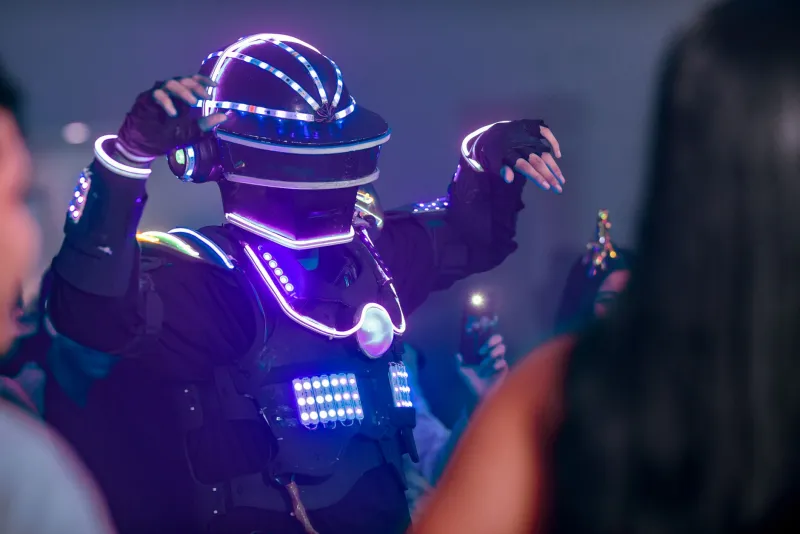
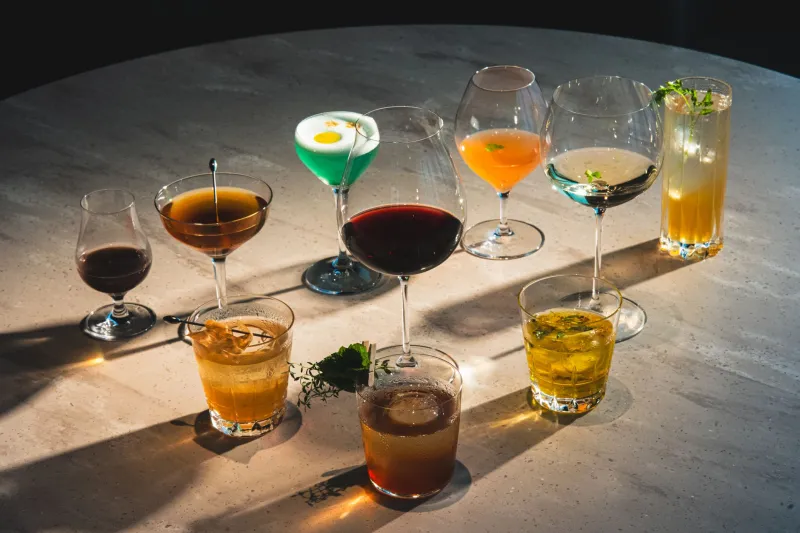
Atlantis Ikebukuro is one of the most photogenic nightlife venues in Tokyo, which is saying something in a city that treats visual design as a competitive sport. The bioluminescent color palette, the architectural references to sunken civilizations, the cocktails that look like they were poured from the ocean floor — all of it is inherently, almost aggressively shareable.
When a venue becomes a social media landmark, visiting it stops being a leisure activity and starts being a content opportunity. And content opportunities feel worth spending on in a way that pure leisure sometimes doesn't. The photos and videos you take at Atlantis Ikebukuro don't just document a night — they signal something to your audience. They say: I went somewhere genuinely rare. I had an experience you haven't had. I found the lost city.
That signal has value beyond the night itself. It keeps paying dividends in likes, comments, and DMs for days afterward. When you factor that extended social return into the original spend, the math starts looking a lot more reasonable.
The Souvenir That Actually Lasts
Here's maybe the most honest explanation for why people spend so freely at Atlantis Ikebukuro: it's the best souvenir Tokyo has to offer.
Most travel souvenirs depreciate immediately. The magnet loses its novelty within a week. The novelty T-shirt gets worn twice and forgotten. Even nice restaurant meals fade into a general warm memory of "great food in Japan." But a night at Atlantis Ikebukuro? That one sticks. The specificity of the experience — the exact cocktail, the exact moment the lighting shifted, the conversation you had at the bar — those details stay sharp in a way that generic tourist purchases never do.
Experiential spending consistently outperforms material spending when it comes to long-term happiness and memory retention. That's not new research. What Atlantis Ikebukuro has figured out is how to engineer an experience so layered and so deliberately crafted that it practically guarantees the kind of vivid memory that justifies the spend retroactively, for years.
You're not buying a night out. You're buying a story you'll still be telling at dinner parties in 2031. Priced that way, $400 starts to look like a steal.