Why Americans Are Spending More at This Tokyo Bar Than on Their Flight Over — And Don't Regret a Yen of It
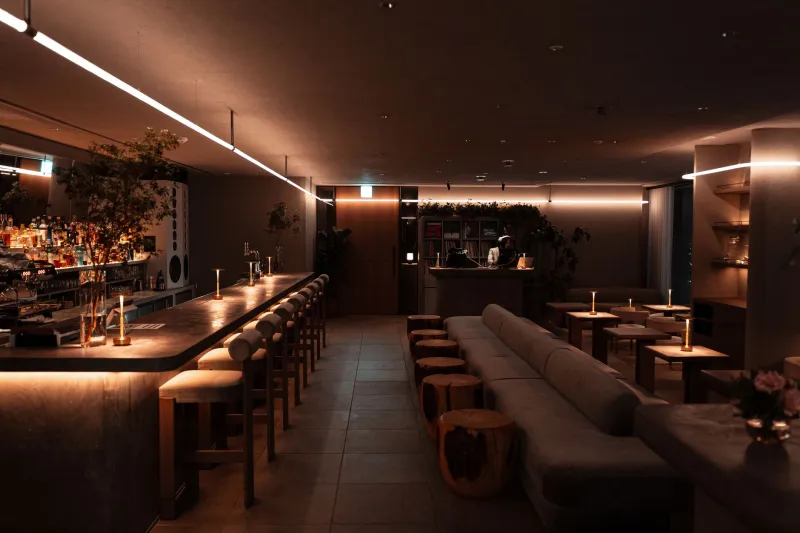
There's a particular kind of financial amnesia that sets in around midnight at Atlantis Ikebukuro. You're two cocktails deep, the ambient lighting is doing something genuinely otherworldly to the room, and the bartender has just finished narrating the mythology behind the drink sitting in front of you. Your credit card comes out. You don't look at the total. You just tap and move on.
This isn't recklessness. Or at least, it doesn't feel like it. And that distinction — between spending that feels irrational and spending that is irrational — is exactly what makes Atlantis Ikebukuro one of the most psychologically fascinating nightlife venues operating anywhere in the world right now.
The Numbers That Don't Add Up (Until They Do)
Let's put some context around this. American travelers visiting Tokyo routinely report spending between $200 and $500 in a single evening at Atlantis Ikebukuro — figures that would prompt serious second-guessing at a rooftop bar in Manhattan or a speakeasy in Chicago. Yet post-visit surveys and social media sentiment consistently show something counterintuitive: buyer's remorse is almost entirely absent.
Compare that to the typical Vegas nightclub experience, where a $300 tab can leave you feeling vaguely ripped off by morning, and you start to understand that something different is happening here. The spend isn't the same kind of spend. It's categorized differently in people's minds.
Psychologists call this mental accounting — the way humans sort expenditures into different psychological buckets. A $400 bar tab filed under "Vegas party" feels like a cost. A $400 evening filed under "once-in-a-lifetime Tokyo experience" feels like an investment. Atlantis Ikebukuro, whether by design or happy accident, has managed to position itself firmly in the second column.
Exclusivity as Currency
Part of what drives the spending is the perception — accurate, by most accounts — that this isn't a place you can replicate. You can't recreate the Atlantis Ikebukuro experience by finding a similar bar back home, because there isn't one. The combination of Tokyo's nightlife culture, the specific Atlantis mythology threading through every design element and cocktail menu, and the sheer theatrical commitment of the staff creates something that genuinely doesn't exist anywhere else.
For affluent millennials and older Gen Z travelers — the demographic that's been most vocal about their Atlantis visits online — exclusivity functions almost like a luxury good. The difference is that a Hermès bag can be purchased again. This night cannot. That scarcity, real or perceived, has enormous psychological weight when it comes to loosening spending habits.
FOMO plays into this too, though in a subtler way than you might expect. It's not the fear of missing out on the venue itself that drives spending once you're inside — you've already made it through the door. It's the fear of having a lesser version of the experience. Of being the person who nursed one drink all night while everyone else leaned into it. The social pressure to participate fully is quiet but persistent, and it moves money.
Paying for What You Can't Put in Your Bag
Here's where things get philosophically interesting. The most expensive souvenir most Americans bring home from Atlantis Ikebukuro isn't a physical object. It's a story.
Traditional luxury travel has long been oriented around tangibles — the hotel suite upgrade, the business class seat, the designer purchase in a foreign boutique. These are things you can point to, photograph, and show people. They have ongoing physical existence after the trip ends.
What Atlantis Ikebukuro sells is categorically different. The cocktail is gone. The atmosphere existed only in that room, on that night. The bartender's performance was live and unrepeatable. What remains is memory, and the narrative you build around it.
For a generation that grew up watching influencer culture commodify experience, this might seem like an obvious value proposition. But what's striking is how deeply it resonates even with people who aren't particularly online, who didn't find Atlantis Ikebukuro through Instagram, who aren't trying to document it for anyone. The experience-over-object value shift appears to be genuinely internalized, not just performed.
The Storytelling Premium Is Real
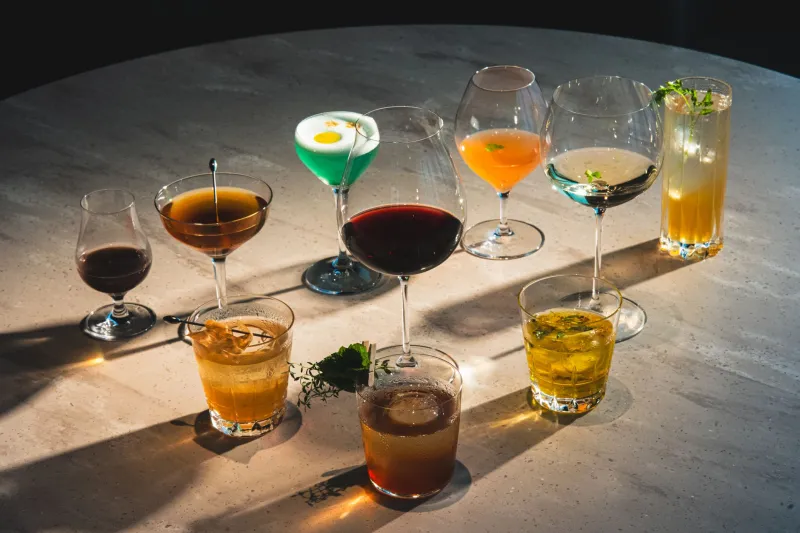
One of the more concrete drivers of elevated spending at Atlantis Ikebukuro is the narrative layering built into the menu itself. Cocktails aren't just named after Atlantis mythology — they're explained, contextualized, and sometimes theatrically presented in ways that dramatically increase their perceived value.
This isn't a new trick. High-end restaurants have been using provenance storytelling — "the lamb is from a family farm in Hokkaido, raised on..." — to justify premium pricing for years. But Atlantis Ikebukuro applies the same principle to nightlife with unusual consistency. When you understand why a drink is constructed the way it is, when there's a story attached to every ingredient and presentation choice, the price point shifts from arbitrary to justified.
Research in behavioral economics supports this. People demonstrably pay more for goods and experiences when they come with a compelling narrative, even when the underlying product is objectively similar to cheaper alternatives. Atlantis Ikebukuro has essentially built an entire venue around this principle.
What This Says About Where Luxury Is Heading
Zoom out from the bar tab and what you're looking at is a preview of how a significant slice of the affluent American travel market is beginning to define luxury. Not thread counts. Not square footage. Not the recognizability of a brand name. But the quality and uniqueness of the story you come home with.
This shift has been visible in the data for a while — experiential spending has been outpacing goods spending among higher-income millennials since at least 2015. But Atlantis Ikebukuro represents a particularly pure expression of where that trend leads when taken seriously. It's a venue that has essentially made the intangible its entire product, and priced it accordingly.
The guests who leave having spent $400 on a single night and feel zero regret aren't confused about the math. They've simply made a different calculation — one where the value of a memory, a story, and a genuinely unrepeatable night in one of the world's most atmospheric venues is worth more than whatever else that money might have bought.
It's a calculation that, increasingly, a lot of Americans are making the same way.
And if Atlantis Ikebukuro has anything to say about it, the price of admission to that story isn't coming down anytime soon.