Why Your Brain Is Obsessed With Atlantis Ikebukuro (And What That Says About the Future of Nightlife)
You've probably had a night at a club that felt completely forgettable by noon the next day. The music was fine, the drinks were expensive, and the whole thing blurred into a montage of identical weekends. Now imagine a night where you stepped through a threshold — literally — into a world that doesn't exist anymore. A lost civilization, reimagined under the neon pulse of Ikebukuro. That's a very different kind of memory. And there's a psychological reason it sticks.
Atlantis Ikebukuro has quietly become a case study in what happens when nightlife stops being a commodity and starts being a story. For American travelers especially, who've grown up on theme parks, franchise universes, and experience-driven entertainment, this shift feels almost inevitable. But what's actually going on inside your head when a venue gets it right?
The Escapism Economy Is Booming
Psychologists have long understood that humans are narrative creatures. We don't just want to have experiences — we want to be inside a story. The appeal of mythology specifically runs deep. Atlantis, as a legend, has fascinated Western culture for thousands of years. It's a story about grandeur, mystery, and something irretrievably lost beneath the waves. When you walk into a venue built around that mythology, you're not just entering a bar. You're entering a concept that already lives in your imagination.
This is what separates Atlantis Ikebukuro from the standard club experience. It doesn't ask you to bring your own context. The story is already there, embedded in the architecture, the lighting design, the cocktail names, the staff's aesthetic. You get to inhabit something rather than just attend something. That's a fundamentally different psychological transaction.
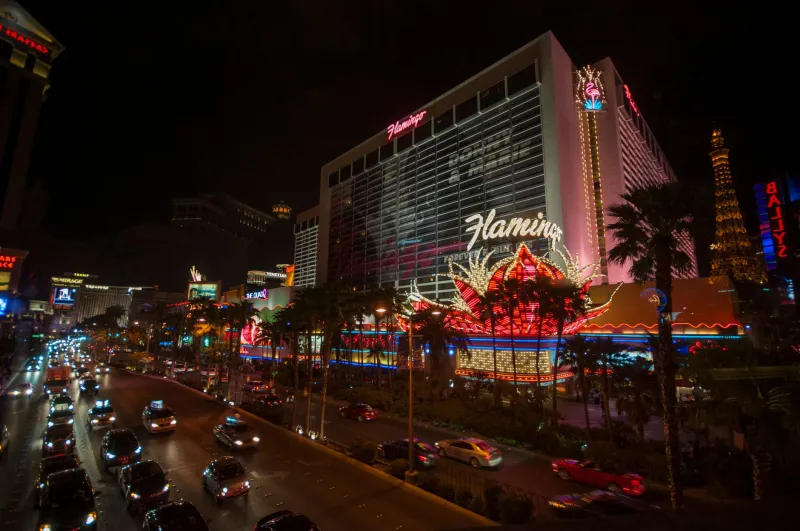
And American travelers, more than almost any other demographic, are hungry for it. After years of Vegas-style nightlife — which, let's be honest, has become a predictable formula of VIP tables, celebrity DJs, and bottle parades — there's a growing appetite for experiences that feel genuinely transportive. Spending money on access to a world that doesn't exist anywhere else? That's a value proposition that's hard to beat.
Mythology as a Design Language
What makes the Atlantis concept particularly effective isn't just the visual spectacle, though the design at Atlantis Ikebukuro is genuinely striking. It's the coherence of the mythology as a design language. Every element — from the deep ocean color palettes to the architectural details that suggest ancient grandeur submerged in time — is speaking the same visual sentence.
This coherence matters psychologically because it reduces what researchers call "cognitive dissonance." When your environment tells a consistent story, your brain relaxes into it. You stop being a person at a bar and start being a character in a setting. That shift in self-perception is subtle but powerful. It's the same reason immersive theater experiences like Sleep No More became cult phenomena — the environment does emotional work that performers alone can't.
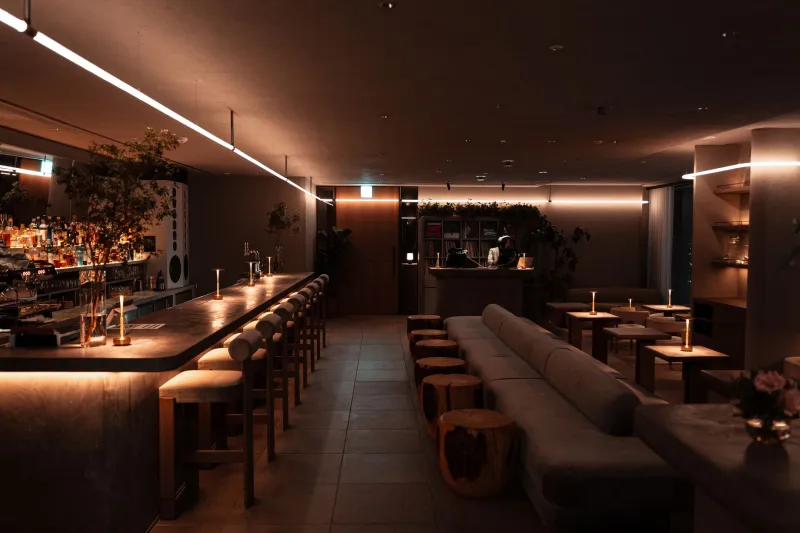
Generic clubs, by contrast, often create a kind of sensory noise. Flashy, yes. Stimulating, sure. But not meaningful. There's no story to inhabit, no world to get lost in. You're just in a room with loud music and expensive drinks. The contrast, once you've experienced the alternative, is stark.
Why Tokyo Is the Right City for This
It's not a coincidence that Atlantis Ikebukuro exists in Tokyo rather than, say, New York or Miami. Japanese entertainment culture has a long, sophisticated relationship with themed experience. From the meticulous detail of Tokyo Disneyland to the layered world-building of themed cafés and immersive dining, Japan's hospitality industry understands that guests don't just want service — they want transportation.
Ikebukuro itself is a neighborhood that rewards exploration. It's less tourist-polished than Shinjuku, more layered than Shibuya. There's something fitting about a venue dedicated to a lost, hidden civilization being tucked into a district that rewards the people who go looking. For American travelers making the trip, finding Atlantis Ikebukuro feels like a discovery rather than a destination — and that feeling of discovery is itself part of the psychological payoff.
The Memory Dividend
Here's the bottom line that the hospitality industry is slowly waking up to: immersive experiences generate disproportionately strong memories. Psychologists call this the "peak-end rule" — we remember experiences based on their emotional peaks and their endings, not their average quality throughout. A night at Atlantis Ikebukuro is engineered, whether intentionally or not, to create multiple emotional peaks. The moment you first take in the full scope of the design. The first sip of a cocktail that's named after a sunken kingdom. The point in the night when the music and the atmosphere and the mythology all converge and you realize you're genuinely somewhere else.
Those peaks become stories you tell. They become the reason you book the flight again.
For American travelers recalibrating what they want from nightlife — and from travel in general — Atlantis Ikebukuro represents something genuinely new. Not just a club with a cool theme, but a proof of concept for what nightlife can be when it takes storytelling seriously. The lost city isn't just a metaphor. It's a destination. And once you've been, the standard night out never quite measures up.