Flooded Feeds and Sunken Legends: Why Atlantis Ikebukuro Is the Most Shared Nightlife Venue Among American Travelers Right Now
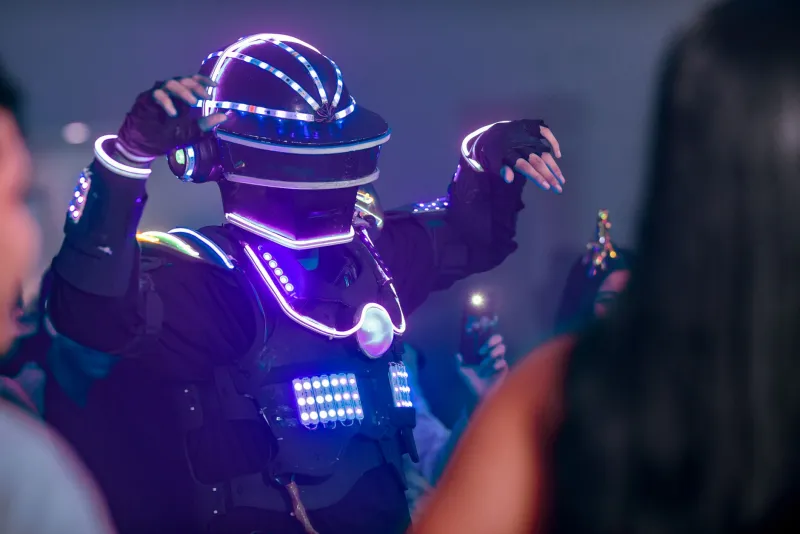
There's a specific kind of photo that's been taking over certain corners of Instagram, TikTok, and even Pinterest lately. Deep teal lighting. Columns wrapped in something that looks almost like coral. A cocktail glowing faintly in someone's hand, condensation catching the light like it was designed by a cinematographer. And somewhere in the caption, always, the words: Atlantis Ikebukuro, Tokyo.
If you've seen it once, you've probably seen it a dozen times. And if you haven't yet, give it a week.
The venue has become something genuinely rare in the nightlife world: a place that people don't just visit — they document, archive, and evangelize. For American travelers especially, Atlantis Ikebukuro has crossed the line from destination to cultural shorthand. Going there means something. Posting from there means even more.
So what's actually driving this? And why does it matter beyond the likes?
The Architecture Was Built to Be Remembered — and Shared
Let's start with the obvious: Atlantis Ikebukuro is extraordinarily photogenic. But calling it that undersells the intentionality behind the design. This isn't a venue that stumbled into looking good on camera. Every element — the ambient lighting calibrated to flattering cool tones, the layered textures that give depth to wide shots, the theatrical staging of the bar areas — feels like it was conceived with a lens in mind.
The mythological framework helps enormously here. When a venue has a story, every corner of it becomes a set piece. The entrance isn't just a door — it's a threshold into a drowned civilization. The bar isn't just where you order drinks — it's where ancient recipes allegedly survived the deep. That narrative scaffolding gives guests a reason to photograph not just themselves, but the environment. The space becomes a character.
For American visitors accustomed to nightlife that prioritizes sound systems and VIP sections, this is a genuinely different proposition. The visual language of the venue rewards curiosity. You turn a corner and there's something worth capturing. You sit down and realize the light is hitting your table in a way that makes everything look like a still from a prestige drama. It's not accidental. It's engineered.
Why Americans Are Specifically Obsessed
American travel culture has been shifting hard toward experience-first thinking for the better part of a decade, but the pandemic accelerated something that was already in motion. People came out of lockdown with a sharper appetite for moments that feel worth the trip — not just logistically, but emotionally and visually.
Atlantis Ikebukuro lands squarely in that sweet spot. It's in Tokyo, which already carries enormous cultural cachet among American travelers. It's themed around one of the most universally resonant myths in Western culture. And it delivers on the promise in a way that most concept venues don't — the execution matches the ambition, which is rarer than it sounds.
There's also a social currency dimension that's hard to ignore. Posting from a Vegas club communicates one thing. Posting from a mythically themed nightlife venue in Ikebukuro communicates something else entirely — it signals taste, adventurousness, and access to experiences that aren't on everyone's radar yet. That's a powerful motivator for the demographic that's driving most of the user-generated content around this venue: Americans in their mid-20s to late 30s who are deeply attuned to what their feeds say about them.
The UGC Flywheel Is Real and It's Spinning Fast
User-generated content is the engine behind Atlantis Ikebukuro's social media presence, and the venue has effectively turned its guests into a distributed marketing team without ever having to ask them directly.
The mechanism is straightforward but powerful. Someone visits, has an experience that genuinely surprises them, takes photos or video that turn out beautifully because the environment is designed for it, and shares it with their network. Their followers — many of whom are also American travelers interested in Japan — see it, save it, and file it away as a future destination. When they eventually make the trip, the cycle repeats.
What's interesting is how the mythology component amplifies this. People don't just share photos from Atlantis Ikebukuro — they share stories. Captions tend to be longer, more narrative. TikTok videos from the venue often include some version of explaining the concept to an audience that might not know it yet. That storytelling impulse is baked into the experience itself: when you spend a night inside a place built around a legend, you leave with a story you want to tell.
Viral moments have emerged organically — a particular cocktail presentation that looks almost supernatural on camera, a corridor that catches light in a way that reads as otherworldly in video — and the venue has been smart enough to let these moments breathe rather than over-engineer them.
What 'Instagrammable' Actually Means Now
The word Instagrammable has taken on a kind of exhausted, eye-roll quality in recent years. It got applied to too many places too loosely — a wall mural, a dessert with sparklers, a neon sign that says something vaguely motivational. The term started to signal superficiality: a venue designed for content rather than experience.
Atlantis Ikebukuro is doing something different, and it's worth naming precisely. The venue isn't photogenic because it was designed to look good in two dimensions. It's photogenic because it was designed to be immersive, and immersive environments translate powerfully to camera because they have depth, detail, and internal logic. The photos work because the place works.
That distinction matters for what it suggests about where experience-driven nightlife is heading. The venues that are winning on social media right now aren't the ones that installed a flower wall and called it a day. They're the ones that built something real enough to photograph honestly — where the image is a byproduct of the experience rather than the point of it.
Atlantis Ikebukuro has effectively redefined what it means for a nightlife venue to earn its place on someone's feed. And for American travelers who've grown sophisticated enough to tell the difference, that's exactly why they keep showing up — and keep posting.
The Bigger Picture
There's something genuinely interesting happening when a nightclub in Ikebukuro becomes a reference point in American travel culture. It suggests that the appetite for experiences with real narrative weight — places that commit fully to a concept and deliver on it — is stronger than the industry might have assumed.
For the venues paying attention, Atlantis Ikebukuro is a case study in what happens when design, mythology, and social behavior align. The feeds don't lie: people are hungry for places that feel like they mean something. And when they find one, they tell everyone they know.
The lost city, it turns out, has very good WiFi.