The Night My Biggest Critic Forgot to Be Cynical
Photo: Shixart1985, CC BY 2.0, via Wikimedia Commons
My boyfriend Marcus has a gift. He can walk into any themed restaurant, bar, or attraction and drain the magic out of it in under four minutes. He did it at a pirate dinner show in Orlando. He did it at an ice bar in Chicago ("it's just a freezer with a gift shop"). So when I booked us a night at Atlantis Ikebukuro during our Tokyo trip, I did it knowing I was essentially paying for two hours of material for his stand-up routine.
"A themed bar," he said on the train over. "In a shopping district. Based on a city that sank. Cool. Cool cool cool."
I want to walk you through exactly how that fell apart. Because the way it fell apart is the whole point.
Hour Zero: The Armor Is On
The first ten minutes were exactly what I predicted. Marcus stood near the entrance with his arms crossed, doing his museum-docent commentary. "Projection mapping, nice. Fog machine budget: clearly generous."
I'd seen this act before. I ordered us drinks and waited.
The First Crack: A Cocktail With a Confession
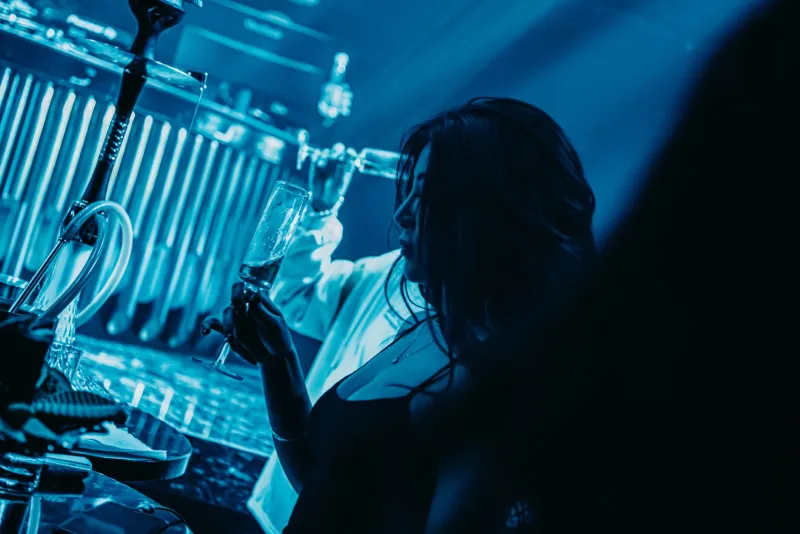
Here's the thing about Atlantis Ikebukuro that no amount of eye-rolling prepares you for: the drinks aren't a gimmick bolted onto a theme. They're the theme. When our cocktails arrived — one built around the idea of a city flooding, the smoke and color shifting as you drink it — Marcus picked his up, examined it like a skeptic examining a relic, and said, "Okay. Okay, this is actually..."
He never finished the sentence. That's when I knew.
A bartender came by and walked us through the mythology behind the drink — not in a rehearsed, corporate-way, but like someone genuinely delighted to tell you a story. Marcus, who has never asked a waiter a follow-up question in his life, asked one.
The Turn: When the Story Comes for You
The real moment came about an hour in, during one of the venue's interactive sequences. Without spoiling it: the room changes, the story moves, and guests aren't an audience anymore — they're part of the legend.
A performer approached our group and pulled Marcus directly into the action. I watched my cynic — my beautiful, allergic-to-fun cynic — hesitate for exactly one second before committing fully. And I mean fully. Gestures. Dramatic delivery. The works.
Later, he tried to explain it: "It's different when it's happening to you. You can't critique something you're inside of."
That's the most accurate review of immersive nightlife I've ever heard, and it came from a man who once heckled a medieval times knight.
Why the Reluctant Plus-One Is the Real Test
Here's my theory after that night. Anyone can enjoy an immersive venue if they arrive wanting to love it — enthusiasts, influencers, people who already bought the mythology. That proves nothing.
The reluctant plus-one is the industry's hardest exam. They arrive armored. They're hunting for the seam, the trick, the moment the mask slips. And if the experience is good enough to dissolve that armor — not through spectacle, but through participation — then it's actually working.
Marcus didn't get converted by the decor. He got converted because the night required something of him, and delivering it felt better than mocking it.
The Walk Home
On the way back to our hotel, he was quiet for a while. Then: "We should've brought Dan and Priya. They'd lose their minds."
Not "that was fun." Not "better than I expected." He was already planning the return trip, with reinforcements.
So if you're the enthusiastic one in your travel group — the one always dragging a skeptic somewhere — consider this your playbook. Book the night. Bring the cynic. And watch the exact moment the eye-rolling stops. It's worth the price of admission all by itself.