Paying for the Story: Why Myth-Soaked Cocktails Command Prices That Make Traditional Bars Look Cheap

Let's start with a number that would make most American bar managers deeply uncomfortable: guests at narrative-immersive nightlife venues consistently report higher satisfaction scores and lower price sensitivity than guests at conventional bars — even when the immersive venue charges significantly more per drink.
That's not a fluke. It's not Tokyo novelty factor or tourist spending patterns. It's a window into something genuinely important about how a specific and growing segment of consumers — largely millennials and Gen-Z — have reorganized the way they think about spending money on a night out. And Atlantis Ikebukuro sits right at the center of this shift.
The Difference Between Expensive and Valuable
Consumer psychology makes a clean distinction between price and value, even when most people use the words interchangeably. Price is what you pay. Value is what you feel you received. The gap between those two things is where brand loyalty is born — or destroyed.
Conventional nightlife has always competed on price because it had a hard time competing on value differentiation. One well-made cocktail is pretty similar to another well-made cocktail. One DJ set occupies roughly the same experiential space as another DJ set. When products are functionally similar, price becomes the main battleground, which is a race nobody particularly wins.
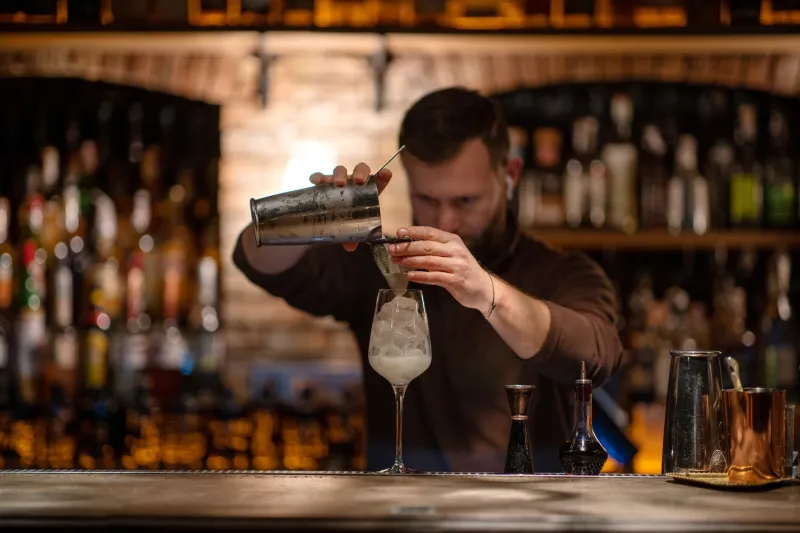
Narrative-driven venues like Atlantis Ikebukuro escape that race almost entirely. When a cocktail isn't just a drink but an artifact — something with a name drawn from myth, a presentation that references a drowned civilization, a story your server can actually tell you — the comparison set changes. You're no longer comparing it to other cocktails. You're comparing it to other experiences. And experiences, especially memorable ones, are notoriously hard to put a ceiling on.
What the Willingness-to-Pay Data Suggests
Spend any time in behavioral economics and you'll run into the concept of "willingness to pay" — the maximum amount a consumer will hand over for something before the price feels unjustified. For commodity goods, that ceiling is pretty fixed and rational. For experiences, especially ones tied to identity, memory, and meaning, the ceiling is dramatically higher and far more elastic.
Research consistently shows that people overpay — relative to pure utility — for experiences that feel meaningful, rare, or tied to a larger story. This is why people spend $300 on a dinner that's conceptually interesting rather than just technically excellent. It's why concert tickets for an artist with strong cultural mythology command multiples of what the same musical performance would fetch from a lesser-known act.
Atlantis Ikebukuro is playing in this space deliberately. The Atlantis mythology isn't decoration — it's the core product. And that mythology has a kind of built-in value architecture that pure aesthetics can't replicate. Myths carry weight. They connect to something older and bigger than any individual experience. When you're drinking a cocktail inside a story about a lost civilization, you're not just consuming a beverage. You're participating in something that feels, at least a little, like it matters.
The Loyalty Math
Here's where it gets interesting from a pure business perspective. Immersive, narrative-driven venues don't just command higher per-visit spending. They generate disproportionately high return visit rates and — more importantly — extraordinarily strong word-of-mouth.
Standard nightlife venues live and die by foot traffic. Get people in the door, serve them well, hope they come back. The marketing cycle is expensive because it has to keep running. A venue that creates genuinely memorable, story-rich experiences operates on different economics. Guests become evangelists. They post. They bring friends. They plan return trips specifically around the venue. The marketing does itself — or at least gets a significant assist from an audience that feels personally invested in sharing the story.
For American travelers planning a Tokyo trip, this dynamic shows up in a very practical way: Atlantis Ikebukuro frequently appears not just in nightlife recommendations but in broader travel itinerary conversations. It's not being discussed the way people discuss restaurants or clubs — as options among options. It's being discussed the way people discuss landmarks. "You have to go" is a different category of recommendation than "you might like." And that category distinction has real economic consequences for a venue's long-term health.
"Meaning" as a Line Item
There's a generational argument worth making here, and it's one that hospitality industry analysts are starting to take seriously. Millennials and Gen-Z don't just want to spend money on things. They want to spend money on things that reflect something about who they are and what they value. This is the same impulse that drives the preference for locally sourced ingredients, for brands with coherent ethical narratives, for travel that feels intentional rather than just recreational.
Nightlife, historically, hasn't been asked to carry much meaning. It's been asked to be fun, accessible, and reasonably priced. But the consumers reshaping this industry have started asking more of it. They want the fun, yes — but they also want a reason. A context. A story that makes the evening feel like more than just a transaction.
Atlantis Ikebukuro gives them that story in a way that's hard to dismiss as gimmicky, because the mythology is genuinely deep and the execution is genuinely committed. This isn't a venue that slapped some tridents on the wall and called it a theme. It's a place where the narrative is structural — where the story is the product and everything else is in service of it.
What This Means for the Price Tag
So what does all of this mean when you're standing at the bar deciding whether to order another round at Atlantis Ikebukuro's prices? Probably that you will. Because the mental calculus has already shifted. You're not comparing the price to what a drink costs at your neighborhood spot back home. You're comparing it to what the whole experience is worth — the design, the story, the memory you're going to take home and talk about for months.
And by that math, most people find the numbers surprisingly easy to justify.
That's the mythology premium. And it turns out it's worth quite a bit.