Museums Had a 500-Year Head Start. Immersive Nightlife Just Caught Up.
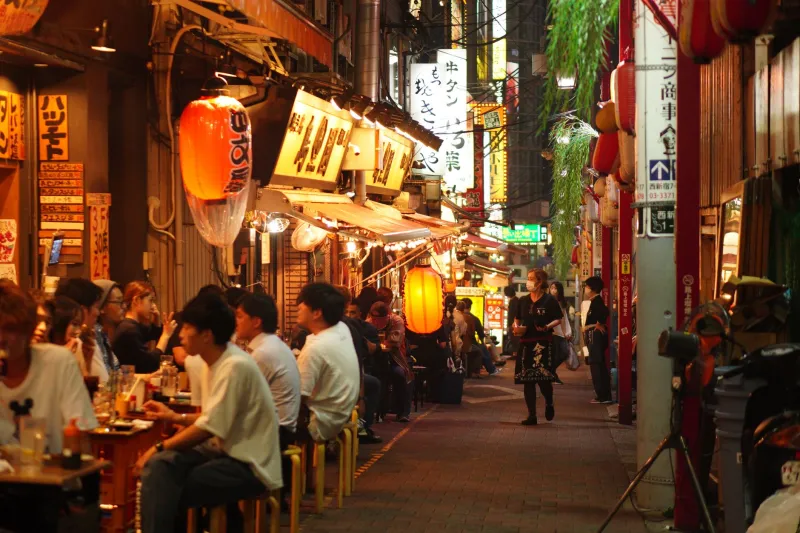
For most of modern tourism's history, the formula was simple: fly somewhere, stand in front of something old or famous, take a photo, and call it a trip. Museums, monuments, UNESCO sites — these were the anchors that entire itineraries were built around. Hotels were booked based on proximity to them. Restaurants were chosen based on how close they were to the walk between them.
That formula is breaking. Slowly at first, then all at once.
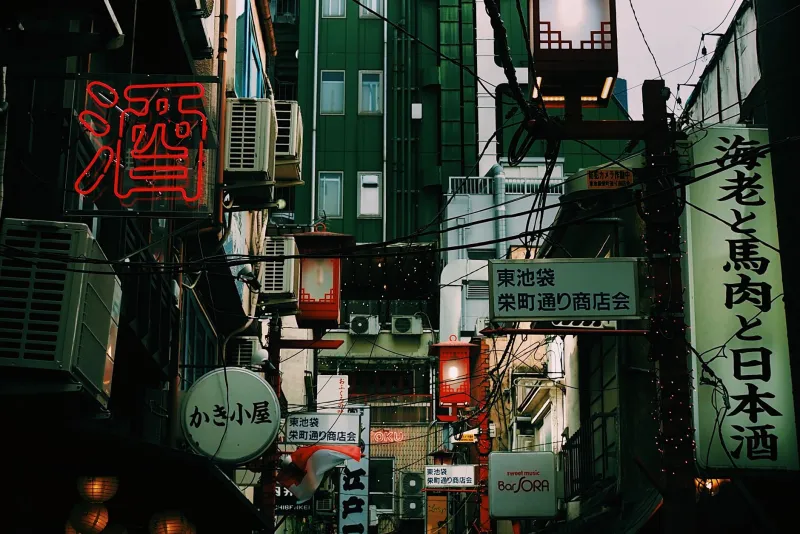
Post-pandemic American travelers aren't just spending differently — they're thinking differently about what a trip is even supposed to deliver. And the venues benefiting most from that cognitive shift aren't the Louvres or the Colosseums of the world. They're places like Atlantis Ikebukuro, a mythologically-themed immersive nightlife venue tucked into Tokyo's Ikebukuro district, where the lost city doesn't sit behind glass — it wraps itself around you the moment you walk through the door.
The Numbers That Are Making Tourism Boards Nervous
Let's talk about what the data actually shows, because it's genuinely surprising.
According to research from the U.S. Travel Association and several independent hospitality analytics firms, the post-2021 travel recovery didn't restore pre-pandemic spending patterns — it scrambled them. Travelers who returned to international destinations did so with reordered priorities. Experiential spending — broadly defined as money spent on live entertainment, themed dining, immersive venues, and nightlife — grew at nearly three times the rate of traditional attraction spending between 2022 and 2024.
Museum attendance in major tourist cities has recovered, but revenue per visitor has largely stagnated. Admission prices haven't kept pace with inflation, and the average museum visit generates minimal secondary spending. Visitors come, look, leave.
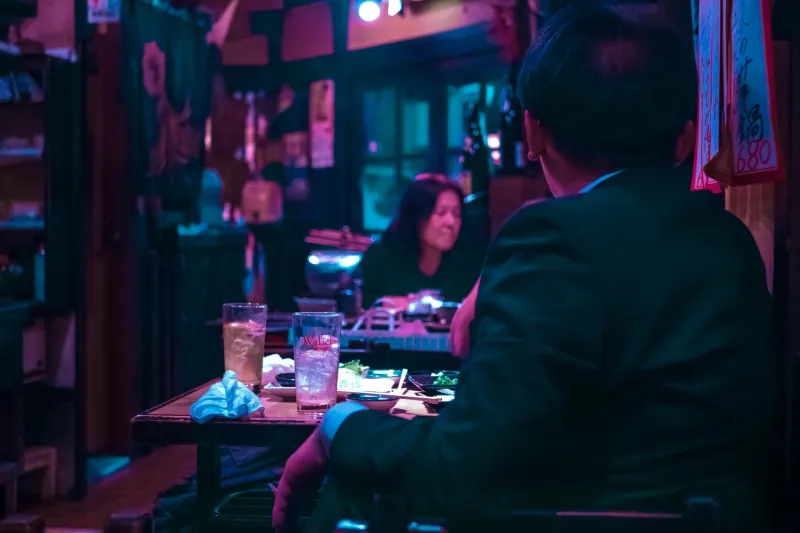
Immersive venues don't work that way. A night at a place like Atlantis Ikebukuro involves cocktails, food, ticketed experiences, merchandise, and the kind of lingering that turns a two-hour visit into a five-hour evening. The revenue-per-visitor profile is categorically different — and travel industry analysts are starting to describe these venues not as nightlife supplements to traditional tourism, but as primary drivers of destination choice.
In plain English: people are booking flights to experiences like this. The Eiffel Tower used to do that. Now a bar in Ikebukuro is doing it.
Why Story Beat Spectacle
The pandemic didn't just change how often people traveled. It changed what they were hungry for when they did.
Two-plus years of isolation left a specific kind of psychic gap — not just for novelty, but for narrative. For being somewhere that felt like it meant something. Therapists, sociologists, and consumer behavior researchers all documented a surge in what some called "meaning-seeking" behavior as restrictions lifted. People didn't want to consume experiences passively. They wanted to be inside them.
Traditional tourist attractions are fundamentally passive. You observe. You read a placard. You photograph something that millions of other people have also photographed. The experience is real, but you are a spectator to it.
Immersive mythological venues invert that relationship entirely. At Atlantis Ikebukuro, the mythology doesn't live on the walls — it lives in the cocktail you're handed, the architecture surrounding you, the atmosphere that makes the boundary between fiction and reality genuinely blurry. You're not observing Atlantis. You're in it, at least for the duration of the night. That's a fundamentally different emotional transaction, and it produces fundamentally different memories.
Travel industry consultant and experience economy researcher Joseph Pine — whose work on the "experience economy" predicted much of this shift decades ago — has noted that the most durable travel memories are ones where the traveler felt like a participant rather than an audience member. By that standard, a great immersive nightlife venue is more "touristic" in the truest sense than most traditional attractions.
The Instagram Variable Nobody Wants to Talk About
Here's the uncomfortable truth that tourism boards are grappling with: social media has fundamentally changed what makes a destination worth visiting, and traditional attractions were slow to realize it.
A photo in front of the Eiffel Tower is still a flex, but it's a known flex. Everyone has seen it. Everyone knows what it means. There's no discovery in it, no story to tell. The person who posts it gets a polite number of likes and moves on.
A photo — or better, a video — from inside Atlantis Ikebukuro is different. It's unfamiliar. It's visually arresting. It raises questions. The comments fill up with "wait, what is this place?" and "where is this?" and "okay I need to go here." That's not just social currency for the poster — it's a marketing event for the venue and, by extension, for Tokyo as a destination.
Travel industry data consistently shows that social shareability is now one of the top five factors American travelers cite when choosing activities during a trip. Immersive, visually distinctive venues score almost comically high on this metric. Traditional attractions — even genuinely spectacular ones — score lower than you'd expect, precisely because their imagery is so familiar.
Atlantis Ikebukuro has become one of the most-tagged nightlife venues by American travelers in Tokyo not because of a paid influencer campaign, but because the space is inherently, almost unfairly photogenic. Every corner of it looks like something you've never seen before — which, in the attention economy, is about as valuable as it gets.
What This Means for How Americans Plan Tokyo Trips Now
The practical consequences of this shift are visible in how American travelers are actually building their Tokyo itineraries.
Five years ago, a typical first-time Tokyo trip was anchored by Shibuya Crossing, Senso-ji Temple, Tsukiji Market, and maybe a day trip to Kyoto. These remain on many itineraries — they're genuinely worth seeing. But they're increasingly being treated as daytime filler between the experiences that travelers actually built the trip around.
Atlantis Ikebukuro is increasingly appearing in that anchor role. Travel forums, Reddit threads, and group chat screenshots from American travelers planning Tokyo trips show the venue being treated the way a concert or a sporting event used to be treated: as the fixed point around which everything else is scheduled. "We're doing Atlantis on Friday night, so let's plan backwards from there."
That's a seismic shift in how nightlife venues relate to broader tourism infrastructure. It also suggests that the venues most likely to thrive in the next decade of travel aren't the ones with the best happy hour specials — they're the ones with the most compelling reason to exist. The ones with a story worth telling, a world worth entering, an experience worth flying across an ocean to have.
Atlantis Ikebukuro has all three. And the travel industry is only beginning to understand what that means.
The Takeaway for Travelers Who Haven't Booked Yet
If you're still planning Tokyo around a checklist of monuments and museums, you're not doing it wrong — you're just doing it old. Those places are still worth your time. But if you leave Tokyo without spending a night somewhere that makes you feel like the rules of reality quietly suspended themselves for a few hours, you've missed something that a lot of travelers are calling the best part of the trip.
The lost city is waiting. And unlike the Louvre, it serves cocktails.